Instead of simply installing a new version of your legacy parking management system, take the opportunity to rethink your entire approach to the parking experience.
Many large corporate, hospital, and university campuses still rely on legacy parking management technology that simply wasn’t built for today’s mobility landscape. Hybrid working models and advancing parking industry tech have changed commuter expectations, driving demand for a modern, friction-free user experience.
If your parking systems are encumbered with aging infrastructure, chances are you’re not delivering that frictionless experience. However, there’s more at stake than just user convenience:
- Outdated parking management systems are less secure and make parking policies harder to enforce.
- Older infrastructure becomes more expensive as it ages, requiring more frequent repairs due to rising failure rates.
- Managers spend more time and resources on manual management and responding to system failures, increasing administrative costs.
- Aging systems make it harder to collect the user data you need to make informed decisions about your parking policies and infrastructure.
Given these drawbacks, you may want to consider doing more than just replacing your aging hardware with a newer version of the same inflexible system. Instead, take the opportunity to reconsider your entire parking strategy by reframing it as a dynamic element of a complete, organization-wide mobility ecosystem. This will help you:
- Build a more flexible, scalable, and convenient parking experience
- Discover new opportunities to utilize your facilities and optimize your revenues
- Advance your organization’s sustainability goals
- Reduce your team’s administrative burden
You’ll also save on operating costs, improve site security, and make life easier for your commuter base through a better user experience.
The visible — and hidden — costs of outdated parking control systems
Maintenance costs rise as parking infrastructure ages. As your equipment gets older, breakdowns become more likely and happen more often. Downtime and service costs soar, creating a self-feeding loop of increasing financial inefficiency.
Other costs are less visible. These include:
- End-of-life software risks. If your parking tech uses aging software, security updates may no longer be available and you may have limited or no access to vendor assistance. This can create both operational and compliance liabilities.
- Rigid functionality. Static permit rules and fixed allocations can’t adapt to hybrid work schedules, dynamic demand, or multiple facility-based user categories. Hybrid and flexible work arrangements in particular have made legacy capacity-based systems outdated and unresponsive to changing organizational needs.
- Fragmented workflows. If you’re using disconnected systems to manage permitting, payments, and enforcement, you’re creating more work for your parking management team while undermining the reliability of your parking data.
In many cases, the full scope of these burdens won’t become apparent until operational strain reaches a tipping point. Reactive fixes, higher costs, and urgent system replacements follow, creating headaches for both commuters and administrators.
Signs it’s time for a parking system upgrade
Is it time to update your parking infrastructure? Some signs are obvious. If your equipment is old and its upkeep costs are high, replacing it probably makes financial and practical sense.
You may also want to consider a full system replacement if:
- You’re still using partially or fully manual permitting, payment, or enforcement tools
- Manufacturer support for your parking hardware has lapsed
- Your setup doesn’t support dynamic pricing, daily access, or real-time space availability indicators
- You’re not able to capture or use parking utilization data effectively
- Commuters and other site users regularly complain about complexity or outdated interfaces
These red flags indicate operational inefficiencies, a lack of flexibility, and a lagging user experience. When considering the issue from these angles, you should also look at whether your parking tech ties into your broader organizational mobility goals.
How parking tech interacts with organizational mobility strategies
By upgrading to modern parking management solutions, you can better support your organization’s broader mobility initiatives. A system boost can dramatically improve the commuter experience, addressing a common pain point: employees often single out difficult commutes as a leading cause of job dissatisfaction.
Tech upgrades specifically support a better commuter experience by making parking faster and more predictable. Modern parking tech provides built-in flexibility for hybrid employees, and creates a clear path to transportation equity through targeted incentives, dynamic pricing, and automated prioritization of EVs, carpools, and ADA compliance.
It also enhances user-facing conveniences, such as:
- Support for mobile, contactless, and automated payroll-linked payment systems
- Real-time space availability displays and updates
- Daily reservations and flexible permitting options
By upgrading your system, you can deliver a parking experience that delivers the kind of seamless efficiency that completely eliminates stress from workplace arrivals.
Full-scale, system-wide improvements also present you with an opportunity to integrate shared-mobility features, impact-reduction infrastructure, and tech tools that make administration and data collection much easier. This allows you to easily add powerful performance capabilities to your system, which benefit both commuters and administrators.
These enhancements can include things like:
- Seamless permitting and support system for commuters on hybrid work schedules
- On-site charging infrastructure for EV drivers
- Priority space assignments for vehicles used in carpooling programs
- Remote parking system management and automated data collection
If your current system lacks these features, it’s constraining your organization and its commuters rather than empowering them. As you upgrade your parking tech, pair it with purpose-built parking management software that centralizes and automates every aspect of your commuter management, permitting, and revenue optimization programs.
Parking software platforms like CommuteHub act as force multipliers, bundling powerful features that boost administrative relief, cut costs, and elevate the commuting experience
Unlock more value with advanced parking management software
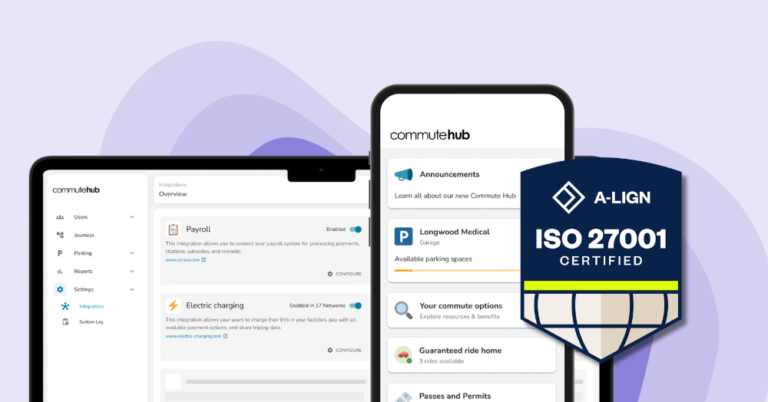
RideAmigos’ CommuteHub transportation demand management (TDM) platform was designed from the ground up to simplify complex parking ecosystems while aligning with organizational commuter management goals. Reflecting our deep expertise in mobility engineering, CommuteHub offers powerful tools that seamlessly connect with modern parking infrastructure to deliver:
- Advanced workflow automation: Eliminate administrative overhead and create a commuter management system that adapts to complex and changing needs with unmatched agility.
- Smarter operations: CommuteHub supports easy, centralized, cloud-based integrations with site access controls and monitoring features. Manage multiple parking zones and permitting types with ease, while gaining access to automated dynamic pricing options that enhance revenues and reduce administrative input requirements.
- Unified data architecture: Connect your parking tech and your organizational commuter programs in a few simple clicks.
- Scalability: CommuteHub’s tools offer the unique advantage of scalability across different facilities and campus locations, making it easy to manage growth, policy changes, and shifting commuter needs.
- Enterprise-grade integrations: Create seamless access controls, policy enforcement, mobility incentives, and payment systems, all while linking your parking facilities directly to HR administrators.
The CommuteHub platform’s commuter-first design philosophy draws on proven behavioral science practices and an intuitive user experience to deliver powerful, measurable outcomes and a technology roadmap that evolves with your needs. As a result, you can continually improve your employee commuter programs without making major reinvestments.
Advance your organization’s sustainability goals
CommuteHub was inspired by a desire to help employers deliver a broader range of healthier and more sustainable transportation alternatives. This functionality remains at the platform’s core, offering a wealth of ways to combine parking management with broader TDM initiatives to advance your mode shift goals and reduce your emissions footprint.
By tracking and managing parking supply more intelligently, you can:
- Change travel behavior by using parking data and dynamic reservation tools to reduce solo car use and support carpooling, transit, and other alternatives.
- Cut emissions by guiding arriving commuters to reserved spaces, which reduces excess emissions from circling for parking and idling in on-site congestion.
- Create high-visibility support for sustainable initiatives by prioritizing EV charging spots and special reservation zones for high-occupancy vehicles.
These features — and CommuteHub’s many other efficiency-enhancing functionalities — generate positive impact through scale while freeing up administrators to focus on additional sustainability planning initiatives and mode-shift programs.
Modernize your organization’s approach to parking
Before you invest in new parking hardware or traditional permitting software, consider how a comprehensive, centralized parking management strategy can:
- Reshape your commuter experience
- Automate parking and permitting processes
- Improve site utilization and optimize parking revenues
- Free up your team to focus on higher-impact priorities
CommuteHub integrates directly with modern parking infrastructure features including access controls, license plate readers, occupancy sensors, and enforcement tools. Validate arrivals in real time, provide dynamic remote support for parking reservations, automate administration, and build a smarter, more efficient approach to parking and commuter management.